Jewellery Brand Identity & Logo Design Guide (2026)
A complete guide to jewellery brand identity and logo design: luxury positioning frameworks, hallmark-ready monograms, rigid unboxing packaging engineering, and trust signals.
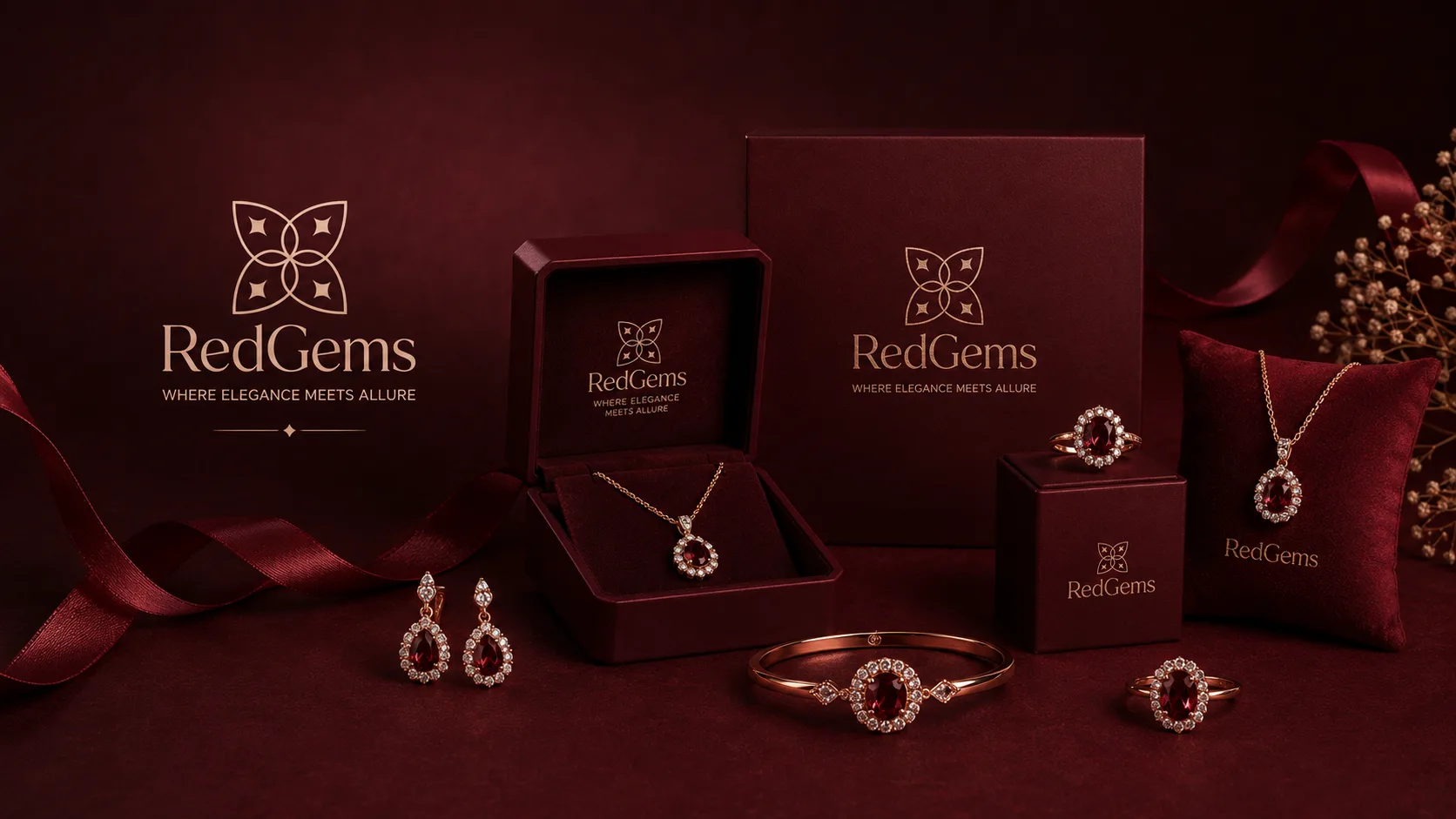
Building a luxury jewellery brand that customers and decision-makers trust requires more than an isolated logo; it demands an integrated visual ecosystem—pairing restrained typography and hallmark-ready vector marks with heirloom-grade rigid packaging (1200–1800 GSM board, anti-tarnish micro-suede, precision hot foil stamping) to transform fine metals into coveted personal legacies.
- In luxury jewellery, branding directly dictates perceived value: identical 18K gold and diamond pieces command 3x–8x price premiums based on brand positioning and packaging.
- Jewellery logos must satisfy extreme scale tolerances: maintaining legibility on showroom facades while remaining crisp when laser micro-engraved on 1.5mm ring bands.
- Rigid unboxing packaging (1400+ GSM Kappa board, magnetic closures, high-density EVA foam, velvet lining) anchors emotional milestone purchases (bridal, gifting, anniversaries).
- Trust signals—including BIS 6-digit HUID hallmarking, GIA/IGI diamond grading cards, and tamper-evident certificates—are mandatory brand credibility assets.
- Red Gems case study illustrates how geometric gemstone facets translate into a cohesive identity across garnet-red packaging and gold-embossed collateral.
In the luxury jewellery industry, branding plays a decisive role in shaping how consumers perceive value. Often, perception matters just as much as the metallurgical purity of the product itself. Two independent ateliers may work with identical 18K gold alloys and VVS1 diamonds sourced from the exact same diamond bourse, yet one brand commands 4x higher pricing, attracts high-net-worth patrons, and builds generational loyalty—while the other is forced to compete on per-gram gold rates. Jewellery is rarely bought as a raw commodity; it represents personal identity, milestone achievement, eternal commitment, and heirloom legacy. Whether you are launching a heritage high-jewellery maison, an ethical lab-grown diamond studio, a bridal boutique, or a modern demi-fine direct-to-consumer label, a cohesive brand identity bridges the gap between raw craftsmanship and emotional prestige. Here is the comprehensive founder's guide to jewellery brand identity design—covering luxury positioning archetypes, hallmark-ready logo design, color psychology, rigid unboxing packaging engineering, and building unshakeable trust.
1. Luxury Jewellery Branding: Why Perception Dictates Value
In commercial retail, price is typically calculated as cost-of-goods-sold (COGS) plus an operational margin. In luxury jewellery, this formula is inverted: pricing power is dictated entirely by brand perception, exclusivity, and emotional resonance.
When affluent clients or decision-makers purchase fine jewellery, they are investing in intangible psychological assets: prestige, cultural cachet, personal milestone celebration (engagements, weddings, career triumphs), and generational inheritance. Weak or inconsistent branding commoditizes the product, forcing the founder to debate per-gram making charges or stone carat markups.
A strategically engineered luxury brand identity delivers four vital commercial advantages:
• Substantial Margin Expansion: Enables the house to command 200% to 500% premiums above raw material value by establishing perceived scarcity and artisanal prestige.
• Immediate Decision-Maker Trust: Institutional investors, high-end department store buyers (such as Harrods or Saks), and luxury retail mall leasing managers judge a brand's viability based on visual refinement, packaging weight, and typographic maturity.
• Generational Customer Lifetime Value (LTV): A client who trusts your bridal engagement ring returns for anniversary pendants, festive gifts, and heirloom commissions over decades.
• Resistance to Price Discounting: Luxury houses never participate in desperate discount wars; their brand equity preserves pricing integrity even during economic fluctuations.
2. Defining Your Jewellery Market Positioning: 4 Core Brand Archetypes
Before commissioning vector logo concepts or selecting box velvet swatches, a jewellery founder must define their strategic market positioning. Positioning determines where your house sits in the luxury spectrum and who you are communicating with:
• Archetype 1: Heritage & Heirloom Luxury: Rooted in timeless classical craftsmanship, royal provenance, and artisanal tradition. Typified by brands like Cartier, Bulgari, or India's traditional royal Polki houses. Visuals prioritize high-contrast classical serif typography, regal heraldic monograms, deep jewel tones (burgundy, emerald, obsidian), and substantial heavyweight presentation cases.
• Archetype 2: Modern Minimalist Luxury: Tailored for contemporary affluent professionals, Millennials, and Gen Z buyers who reject ornate, heavy jewellery in favor of understated, architectural, and everyday wearable elegance. Typified by brands like Repossi or Mejuri. Visuals emphasize clean humanist sans-serifs, geometric negative space, warm neutral palettes (ivory, alabaster, taupe), and sleek book-style magnetic packaging.
• Archetype 3: Sustainable & Lab-Grown Diamond Luxury: Caters to ethically conscious buyers who demand complete environmental transparency, carbon-neutral lab diamonds, and recycled precious metals. Typified by brands like Vrai. Visuals reflect technological purity, scientific precision, minimalist monograms, and certified recycled packaging certified by FSC.
• Archetype 4: Demi-Fine & Fashion D2C: Bridges the gap between fast-fashion trinkets and unattainable high jewellery, focusing on 18K gold vermeil, 925 sterling silver, and semi-precious gemstones. Visuals are dynamic, trend-forward, social-media-first, with tactile unboxing pouches designed for viral digital sharing. Review our complete guide to D2C packaging design in India for digital unboxing strategies.
3. Jewellery Market Segmentation & Brand Identity Specifications
To build an effective identity, align your creative deliverables with your category's commercial requirements:
| Jewellery Tier | Target Demographic | Average Price Point | Logo & Typography Style | Packaging Materials & Caliper | Mandatory Trust Signals |\n| :--- | :--- | :--- | :--- | :--- | :--- |\n| High & Fine Jewellery | HNWIs, Ultra-affluent, collectors | ₹1,50,000 – ₹25,00,000+ | Bespoke Serif Wordmark + Intricate Monogram | 1500–1800 GSM Kappa Rigid Box, Silk/Velvet lining, Hot Foil | BIS Hallmark (HUID), GIA/IGI Diamond Certificate, Velvet Folder |\n| Lab-Grown Diamond | Eco-conscious millennials, bridal | ₹40,000 – ₹3,50,000 | Precision Sans-Serif, Geometric Minimal Mark | 1200–1400 GSM FSC Recycled Rigid Box, Magnetic Catch | IGI/SGL Lab Certificate, Carbon-Neutral Verification Card |\n| Bridal & Heritage Heirloom | Wedding families, luxury gifting | ₹2,00,000 – ₹50,00,000+ | Classical Roman Serif, Royal Crest / Emblem | Handcrafted Wooden or Heavy Rigid Case, Brocade / Suede | BIS 916/750 Hallmark, Purity Guarantee Deed, Embossed Box |\n| Demi-Fine Jewellery | Working women, self-purchasers | ₹3,000 – ₹35,000 | Contemporary Sans-Serif, Clean Initial Monogram | 1000–1200 GSM Drawer Box, Anti-Tarnish Microfibre Pouch | 925 Sterling Silver Stamp, Care & Anti-Tarnish Warranty Card |\n| Fashion & Contemporary | Gen-Z, impulse fashion shoppers | ₹800 – ₹5,000 | Playful Modern Typography, Bold Graphic Icon | Foldable Pillow Pack or Tuck Carton, Satin Ribbon | Brand Authenticity Seal, Social Media Unboxing Card |
4. Jewellery Logo Design: Crafting a Hallmark-Ready Brand Mark
Designing a jewellery logo presents extreme technical challenges that mass-market graphic designers routinely fail to anticipate. Unlike an app icon or billboard logo, a jewellery mark must function across a staggering scale range—from an illuminated 10-foot showroom facade down to a microscopic 1.2mm laser engraving on the inner shank of a platinum wedding band.
The Three Primary Jewellery Logo Formats:
• 1. Bespoke Typographic Wordmarks: The gold standard for fine jewellery maisons (think Tiffany & Co., Bvlgari, Harry Winston). Relying entirely on customised letterforms, letter-spacing (kerning), and stroke modulation. Custom high-contrast serifs convey timeless heritage; geometric low-contrast serifs communicate modern European restraint. Hairline serifs must be manually thickened for print reproduction to prevent dropout during hot foil stamping.
• 2. Geometric Monograms & Interlocking Initials: An essential asset for luxury houses (think Chanel's interlocking C's, Louis Vuitton's LV monogram, or our Red Gems RG mark). Monograms provide an instantly recognisable shorthand that can be stamped on packaging lids, embossed on certificate seals, woven into anti-tarnish ribbon, or cast directly into gold charms.
• 3. Symbolic Emblems & Gemstone Motifs: If incorporating a symbol, avoid generic clip-art diamond outlines. Instead, draw inspiration from proprietary architectural cuts (emerald cut, marquise, cushion), celestial geometry, or cultural heritage. In our Red Gems case study, the brand emblem was derived from the hexagonal crystal structure of natural garnet gemstones.
Critical Technical Engraving & Tooling Tolerances:
• Vector Precision: All logo paths must be drawn with zero overlapping vector anchor points and converted to clean outlines. Automated laser engraving CNC machines trace vector outlines; stray anchors cause laser burn-in spots on precious metal.
• Minimum Stroke Weight for Hot Foil Stamping: In luxury packaging prepress, metallic hot-stamping foil requires a minimum stroke width of 0.25pt (0.09mm). Hairline strokes under 0.2pt will fail to pick up foil adhesive, while negative gaps under 0.3pt will fill in and bridge with molten foil.
5. Luxury Color Palettes & Typographic Hierarchy
Color in luxury jewellery serves as a subconscious shorthand for pedigree and exclusivity. The most enduring jewellery maisons establish signature brand colors that become iconic cultural assets (such as Tiffany Blue or Cartier Red).
Proven Luxury Color Palettes for Indian & International Houses:
• Deep Garnet / Ruby Red & Champagne Gold: Associated with passion, bridal prosperity, and gemstone heritage. Ideal for bridal and heritage jewellery houses where red carries profound cultural celebration. (Featured in our Red Gems project).
• Obsidian Black, Crisp Ivory & Warm Bronze: The quintessential high-luxury palette. Black communicates architectural permanence; warm ivory softens the contrast, and subtle champagne gold adds warmth without garishness.
• Imperial Emerald Green & Polished Brass: Conveys deep botanical heritage, royal emerald prestige, and vintage sophistication. Excellent for fine heirloom jewellery and vintage antique curators.
• Warm Alabaster, Cashmere Taupe & Rose Gold: Contemporary, understated, and feminine. Ideal for modern demi-fine studios and lab-grown diamond brands focused on everyday luxury.
For deep guidance on selecting hues and testing cultural associations, review our in-depth framework on color psychology in branding.
Typographic System Hierarchy:
• Primary Display (Serif / High-Contrast): Used exclusively for the brand name, collection titles, and luxury packaging lids (e.g., Cormorant Garamond, Ogg, Canela, or bespoke custom type).
• Secondary Body (Humanist Sans-Serif): Clean, neutral, highly legible typography used for diamond specifications, ring sizes, warranty text, and digital e-commerce product pages (e.g., Neue Haas Grotesk, Montserrat, Albert Sans).
6. Luxury Packaging Engineering: The Unboxing Ritual as Value Creator
In jewellery, packaging is never discarded—it is preserved on dressing tables for decades as an integral part of the heirloom experience. The weight, tactile feel, and acoustic closure of a jewellery box create the sensory buildup before the jewel is ever unveiled.
Anatomy of an Heirloom Luxury Packaging System:
• Rigid Presentation Box (1200–1800 GSM Greyboard): Never use flimsy folding cartons for fine jewellery. Luxury boxes are engineered from high-density rigid Kappa board wrapped in premium uncoated paper (such as Fedrigoni, Colorplan, or Winter & Company) with seamless 45-degree hand-turned edges. Book-style magnetic closures or classic two-piece shoulder-and-neck boxes provide satisfying acoustic snap.
• Precision Die-Cut Insert (High-Density EVA Foam): The jewel must sit proudly at the center of the box, immovably secured against transit shock. We engineer custom 35–45 kg/m³ high-density EVA foam inserts wrapped in plush velvet, micro-suede, or Italian silk, featuring custom die-cut slits tailored to ring shanks, earring posts, or necklace chains. For dieline blueprints, read what is a packaging dieline.
• Anti-Tarnish Microfibre & Suede Travel Pouches: Sterling silver and low-carat golds oxidize when exposed to atmospheric sulfur and humidity. Luxury houses include branded micro-suede or velvet travel pouches treated with sulfur-absorbing anti-tarnish linings and debossed monograms.
• Heavyweight Shopping Bags with Grosgrain Handles: 250–300 GSM art card bags reinforced with top and bottom turnover boards, finished with matching woven grosgrain or satin ribbons and hot-stamped foil logos.
7. Building Trust: BIS Hallmarking, Provenance & Purity
Trust is the foundational pillar of high-value jewellery transactions. Consumers are making emotionally charged, financially significant commitments; they require tangible proof of authenticity, metal purity, and ethical provenance.
Mandatory Trust & Authentication Assets for Jewellery Brands:
• Mandatory BIS Hallmarking (India): Under Indian law, gold jewellery sold to consumers must carry the official Bureau of Indian Standards (BIS) hallmark: the BIS triangular logo, metal purity mark (e.g., 22K916 for 22-carat gold, 18K750 for 18-carat gold), and the mandatory 6-digit alphanumeric HUID (Hallmark Unique Identification). Brand collateral should clearly explain these marks on care cards.
• Diamond Grading Laboratory Certifications: High-value diamonds must be accompanied by certificates from globally recognized independent gemological institutes: GIA (Gemological Institute of America), IGI (International Gemological Institute), or SGL (Solitaire Gemological Laboratories).
• Branded Certificate of Authenticity Folder: Fine jewellery packaging should house a dedicated hard-cover certificate booklet or embossed cardstock envelope. This contains the gemstone grading report, serial number, metal weight, date of purchase, and the master jeweler's signature.
• Ethical Sourcing & Kimberley Process Declarations: Modern consumers expect clear declarations that diamonds are 100% conflict-free and compliant with United Nations resolutions. Lab-grown brands must provide certified carbon-neutral or renewable energy documentation.
8. Studio Case Study: Red Gems Identity & Packaging System
To understand how strategic positioning, hallmark-ready logo design, and rigid packaging coalesce into commercial success, consider our studio project for Red Gems Luxury Jewellery:
• The Challenge: Red Gems required a complete brand overhaul to transition from an unbranded gemstone wholesaler into a direct-to-consumer luxury maison commanding premium margins for bespoke ruby, garnet, and fine diamond creations.
• The Strategic Identity: We designed a distinctive geometric emblem inspired by the 58-facet brilliant cut of precious stones, pairing it with an elegant high-contrast serif wordmark. The color system established a signature Garnet Red (Pantone 1955 C) paired with muted Champagne Gold and Obsidian Charcoal.
• Heirloom Packaging Architecture: We engineered a complete family of custom rigid boxes (ring, pendant, bracelet, and bridal necklace suites) crafted from 1400 GSM board wrapped in custom-dyed textured paper. Each box features a magnetic book-style closure, recessed hot-stamped gold foil monogram, and plush charcoal micro-suede inserts.
• The Tangible Result: The unified identity transformed the client's perceived value overnight, allowing Red Gems to launch premium fine jewellery collections with 3x higher price realization, secure placement in premier showrooms, and build an enviable reputation for bespoke gifting unboxing.
9. Common Jewellery Branding Mistakes That Destroy Perceived Value
In our studio audits of emerging jewellery businesses, we frequently observe six critical branding errors:
• 1. The Generic Clip-Art Trap: Using generic stock diamond icons, interlocking rings, or thin geometric sparkle stars. These convey cheap mass-market costume jewellery rather than bespoke fine artistry.
• 2. Over-Complicating Vector Marks: Adding intricate filigree, thin flourishes, or miniature shading. These details turn into illegible ink smudges when foil-stamped on small jewelry tags or become distorted when micro-engraved on curved ring shanks.
• 3. Cheap, Lightweight Packaging: Investing lakhs into exquisite 18K gold craftsmanship only to package the item in a lightweight 300 GSM paperboard carton with synthetic plastic foam. The tactile disconnect instantly destroys perceived luxury.
• 4. Inconsistent Multi-Channel Visuals: Presenting an opulent, dark aesthetic in showroom packaging while running bright, casual pastel graphics on Instagram. Luxury demands monolithic consistency across every touchpoint.
• 5. Participating in Discounting Wars: Running aggressive '50% Off Everything' holiday banners. Luxury is rooted in exclusivity and price integrity; chronic discounting signals desperation and erodes trust among prior high-paying buyers.
• 6. Ignoring Font Licensing & Technical Outlines: Using pirated or unlicensed display fonts on packaging and showroom signage, or failing to convert type to vector curves before sending to mold-makers.
10. FAQs: Jewellery Branding & Luxury Packaging
How much does it cost to build a luxury jewellery brand identity in India? Professional jewellery brand identity design—including discovery, hallmark-ready logo suite, typography, color system, and complete packaging dieline specifications—typically ranges from ₹45,000 to ₹1,50,000 for boutique brands, and ₹2,00,000 to ₹6,00,000+ for established fine jewellery houses. For detailed tier pricing, review our brand identity design cost guide.
What is the minimum line thickness for hot foil stamping on jewellery boxes? In luxury packaging prepress, the standard minimum line width for hot foil stamping is 0.25pt (approx 0.09mm). Lines thinner than 0.2pt risk dropout where foil fails to adhere, while negative gaps between lines should remain above 0.35pt to prevent molten foil from bridging.
How do I make my jewellery brand look luxury on a startup budget? Focus on radical restraint: select a clean, distinctive wordmark rather than an ornate symbol; adopt an understated monochrome or deep jewel-tone palette; and invest your initial budget into high-density stock rigid boxes customized with custom-engraved brass hot-foil stamping and custom-dyed grosgrain ribbon.
What materials are best for luxury jewellery box inserts? The luxury standard is high-density closed-cell EVA foam (35–45 kg/m³) laminated with anti-tarnish micro-suede, velvet, or silk. Avoid cheap low-density polyurethane sponge foam (which yellows and sags over time) or hard unpadded plastic.
Can a jewellery logo be micro-engraved on ring bands? Yes, provided the logo includes a simplified, single-color monogram or icon version optimized for laser engraving. Engraving strokes must be at least 0.15mm thick to remain crisp and legible when inspected under a 10x jeweler's loupe.
How long does a complete jewellery branding project take? A comprehensive jewellery branding engagement—from initial positioning research and logo development to packaging dieline engineering, physical proof review, and brand guideline documentation—typically requires 4 to 8 weeks.
Freelance packaging & brand identity designer based in New Delhi, India. Helping D2C startups, food & beverage brands, and international companies build FSSAI-compliant packaging dielines, luxury rigid boxes, and shelf-ready visual identities.
Get a Fixed-Price Quote in 24 Hours
Send your packaging format, SKU count, and launch date. Receive a transparent itemized proposal with vector dielines and printer coordination.