Spice & Masala Packaging Design in India: Complete Guide
A practical guide for Indian spice and masala founders on designing pouches, tins, and mono-cartons that preserve volatile aroma oils, pass FSSAI scrutiny, and capture supermarket shelves.
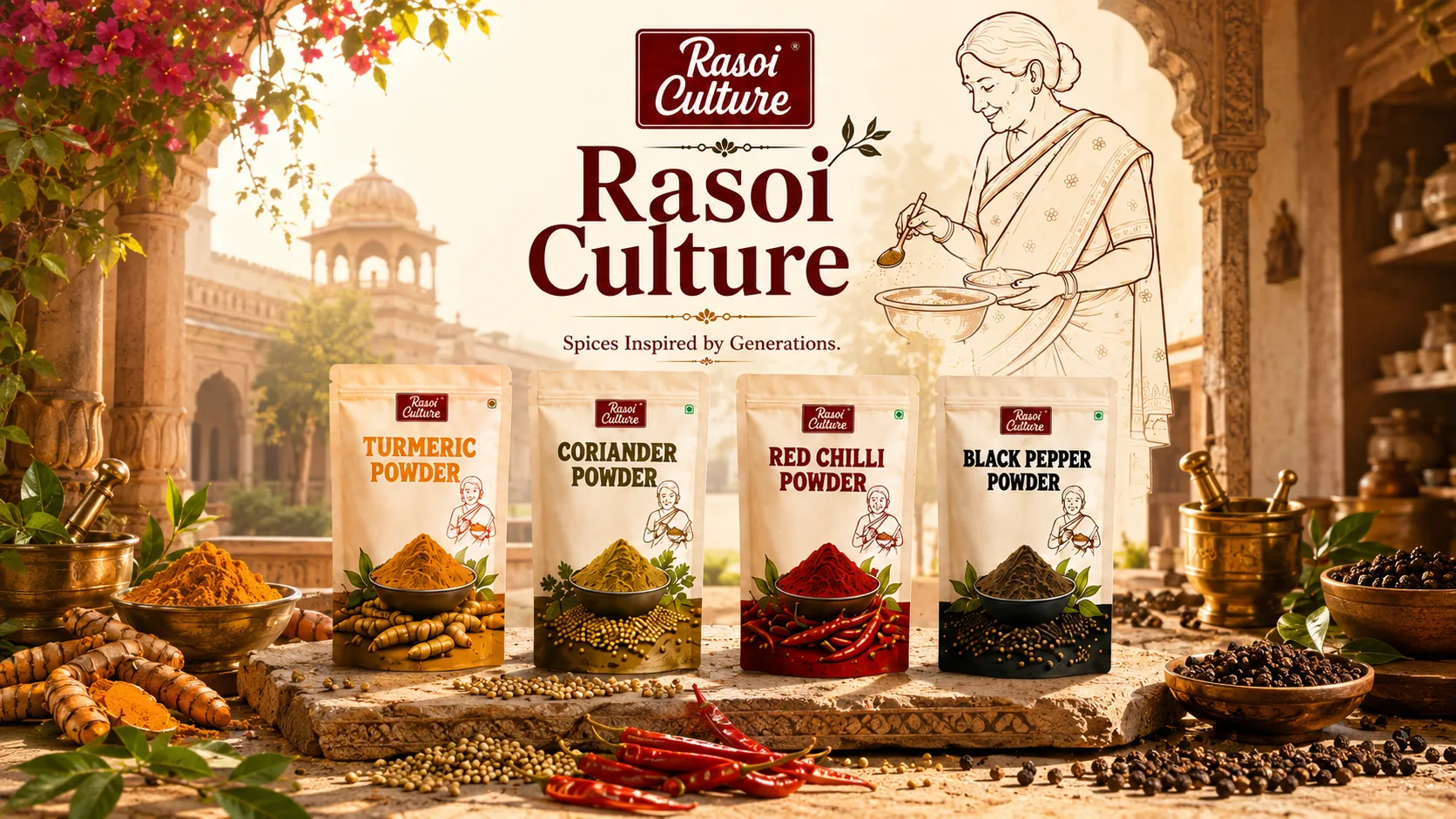
Spice packaging in India requires multi-layer barrier materials (PET/MET-PET/Poly pouches or food-grade tins) to preserve volatile aroma oils, combined with mandatory FSSAI declarations: veg logo, ingredient breakdown, Spices Board registration, AGMARK certification where applicable, and lot traceability.
- Multi-layer barrier laminates prevent volatile oil oxidation (curcumin, piperine) and moisture caking.
- Always integrate a heavy-duty resealable zipper to keep your pack on the kitchen counter instead of being decanted.
- Front panel must feature clear product descriptors, net weight, veg logo, and AGMARK grade if claiming purity.
- Quick-commerce 120px thumbnails require distinct color-coding per spice variant (Haldi yellow, Mirch red, Dhania green).
- Transparent viewing windows must be UV-treated to prevent light-induced spice discoloration.
In India's ₹70,000+ crore spice market, a historic shift is underway: consumer households are rapidly transitioning from commodity loose spices and generic regional powders to premium, single-origin spices, organic blends, and artisanal D2C masalas. Yet, spice packaging presents technical, chemical, and sensory challenges unlike almost any other food category: volatile essential oils degrade upon UV exposure, humidity causes severe caking, and retail supermarket shelves are drowned in a sea of generic yellow-and-red boxes. Here is how modern spice founders build packaging that preserves intense culinary aroma, satisfies FSSAI compliance, commands premium pricing, and dominates retail shelves.
1. Technical Substrates: Preserving Volatile Oils & Aroma
Spices derive their signature aroma, pungency, and medicinal potency from volatile essential oils: curcumin in turmeric, piperine in black pepper, cinnamaldehyde in cinnamon, and eugenol in cloves. When exposed to ambient oxygen, humidity, or ultraviolet sunlight, these delicate compounds oxidize and evaporate, leaving spices stale, flat, and faded within weeks.
Substrate Selection for Spice Packaging:
• Flexible Multi-Layer Stand-Up Pouches: The industry standard for high-volume ground masalas. Formed from 3-ply barrier structures: Matte BOPP or PET (outer print layer) + MET-PET or Aluminum Foil (gas and UV barrier) + Food-Grade Polyethylene (sealant layer). Guarantees near-zero oxygen and moisture transmission.
• Airtight Tinplate Canisters: Ideal for whole spices, premium cardamom, Kashmiri saffron, and luxury gifting. Provides 100% light blockage and crushing protection.
• Amber Glass Jars with Induction Wads: Premium aesthetic for organic spices, paired with airtight heat-induction foil seals beneath the cap to guarantee factory-fresh aroma upon first opening.
The Countertop Retention Factor: Always incorporate a heavy-duty press-to-close zipper on pouch dielines. In consumer testing, Indian homemakers immediately decant spices into plastic kitchen containers if the primary pouch lacks an effective reseal mechanism. A reliable zipper keeps your branded pouch on the kitchen counter for months, driving continuous repeat brand recall.
2. Shelf Impact & Color Coding by Spice Profile
Walk down the spice aisle of Nature's Basket, Modern Bazaar, or a supermarket, and you will see overwhelming visual clutter: competing legacy brands shouting with identical red, yellow, and green boxes. To achieve instant "shelf interrupt," modern brands must establish an unmistakable visual hierarchy that respects culinary semiotics while cutting through noise:
• Haldi / Turmeric: Warm Golden Ochre & Mustard Yellow
• Kashmiri Mirch & Degi Mirch: Rich Deep Crimson & Fiery Vermilion
• Dhania / Coriander: Fresh Botanical Leaf Green & Earthy Olive
• Garam Masala & Roasted Blends: Deep Warm Charcoal, Clove Umber & Cinnamon Brown
• Amchur & Chaat Masala: Tangy Ochre & Citrus Sand
Standardize master branding, logo placement, and typographic scale across all packs, while using the lower 40% for intuitive variant color coding. This allows consumers to identify their target spice variant in under half a second on physical shelves or quick-commerce apps like Blinkit and Zepto.
3. Transparent Windows: The Double-Edged Sword of Spice Packaging
Indian consumers are deeply sensitive to spice adulteration (such as chalk in turmeric or brick powder in chili). A transparent die-cut viewing window on the pouch front is an extraordinarily potent trust signal—it lets shoppers visually inspect the coarse artisanal grind, vibrant natural color, and purity before buying.
However, transparent windows present a severe technical risk: direct sunlight through clear plastic accelerates photo-oxidation, turning rich turmeric pale and chili powder brownish within weeks under supermarket tube lighting.
The Technical Solution: If incorporating a viewing window, position it in the lower third of the pouch, ensure the clear film is treated with UV-blocking additives, and advise retailers to store stock away from direct window sunlight.
4. FSSAI Labeling Requirements Specific to Indian Spices
Spice packaging in India must strictly adhere to the Food Safety and Standards (Labelling and Display) Regulations, 2020:
• FSSAI Logo & 14-Digit License Number: Displayed prominently on the information panel alongside manufacturer/packer details.
• Clear Spice Nomenclature: Under FSSAI standards, whole spices, powdered single spices, and mixed spice blends (e.g., Pav Bhaji Masala, Sambar Powder) have distinct regulatory definitions. The product descriptor must match standard schedule terminology.
• Descending Ingredient List: Mandatory for all blended masalas, listing ingredients by in-going weight at time of manufacture. State common names (e.g., "Coriander Seeds", "Cumin", "Dried Mango Powder").
• Mandatory Allergen Callout: Under Regulation 5(3), if a spice blend contains wheat (e.g., asafoetida compounded with wheat flour) or mustard seeds, bolding in the ingredient list AND a separate "Contains: [Allergen]" advisory box is legally mandatory.
• AGMARK & Organic Jaivik Bharat Certification: If claiming AGMARK purity grades (Special, Good, Standard) or organic status, official certification marks and batch numbers must appear on the dieline.
5. Preparing Prepress Dielines for Flawless Pouch Printing
Rotogravure printing on flexible metalized films requires strict prepress discipline:
• Layer Separation: Keep cutting boundaries (solid magenta), score creases (dashed cyan), and 3mm bleed margins on a dedicated non-printing technical layer in Adobe Illustrator.
• Total Area Coverage (TAC): Keep CMYK ink coverage under 280% on flexible films to prevent ink dragging or solvent retention smells inside the pouch.
• Barcode Scannability: Print the GS1 EAN-13 barcode on a flat, non-gusseted panel with a solid white quiet zone background (minimum 2.5mm margin). Barcodes printed over transparent windows or curved bottom gussets cannot be read by supermarket optical scanners.
• Matte & Gloss Finish Spot Plates: For premium luxury masalas, combine all-over matte BOPP film with spot UV gloss over the spice illustration or brand logo, supplying a dedicated 100% K vector spot plate to the cylinder engraver.
6. Frequently Asked Questions About Spice & Masala Packaging
What material is best for spice packaging in India? The gold standard for whole and ground spices in India is multi-layer laminated barrier film: PET + MET-PET + Polyethylene (or aluminum foil laminates). Spices contain volatile essential oils (curcumin in turmeric, piperine in pepper) that quickly evaporate when exposed to oxygen and sunlight. Metalized barrier laminates block UV light, ambient humidity, and aroma escape. For luxury or gift tiers, tinplate canisters and amber glass jars offer superior shelf life and premium appeal.
Do spice brands need FSSAI registration? Yes, 100%. In India, every spice manufacturer, blender, packer, and D2C brand must hold a valid FSSAI license or registration before selling commercially. Businesses with annual turnover up to ₹12 lakhs require basic FSSAI Registration (Form A), while brands exceeding ₹12 lakhs must obtain a State or Central FSSAI License (Form B). The 14-digit license number and official FSSAI logo must be legibly printed on the packaging along with mandatory statutory declarations.
How do I design a stand-up pouch for spices? Designing a stand-up pouch (doypack) starts with obtaining the exact CAD dieline from your pouch converter, accounting for bottom gusset depth, heat-seal margins (typically 8mm–10mm on edges), and tear notches. Position your brand name and variant title in the upper two-thirds for visibility when pouches sit in shelf trays or quick-commerce thumbnails. Always incorporate a heavy-duty press-to-close zipper and ensure the GS1 barcode sits on a flat, non-gusseted back panel.

Freelance packaging & brand identity designer based in New Delhi, India. Helping D2C startups, food & beverage brands, and international companies build FSSAI-compliant packaging dielines, luxury rigid boxes, and shelf-ready visual identities.
Get a Fixed-Price Quote in 24 Hours
Send your packaging format, SKU count, and launch date. Receive a transparent itemized proposal with vector dielines and printer coordination.