Packaging Design for Spice & Masala Brands in India: A Founder's Guide to Shelf Impact and FSSAI Compliance
A practical guide for Indian spice and masala founders on designing pouches, tins, and mono-cartons that preserve volatile aroma oils, pass FSSAI scrutiny, and capture supermarket shelves.
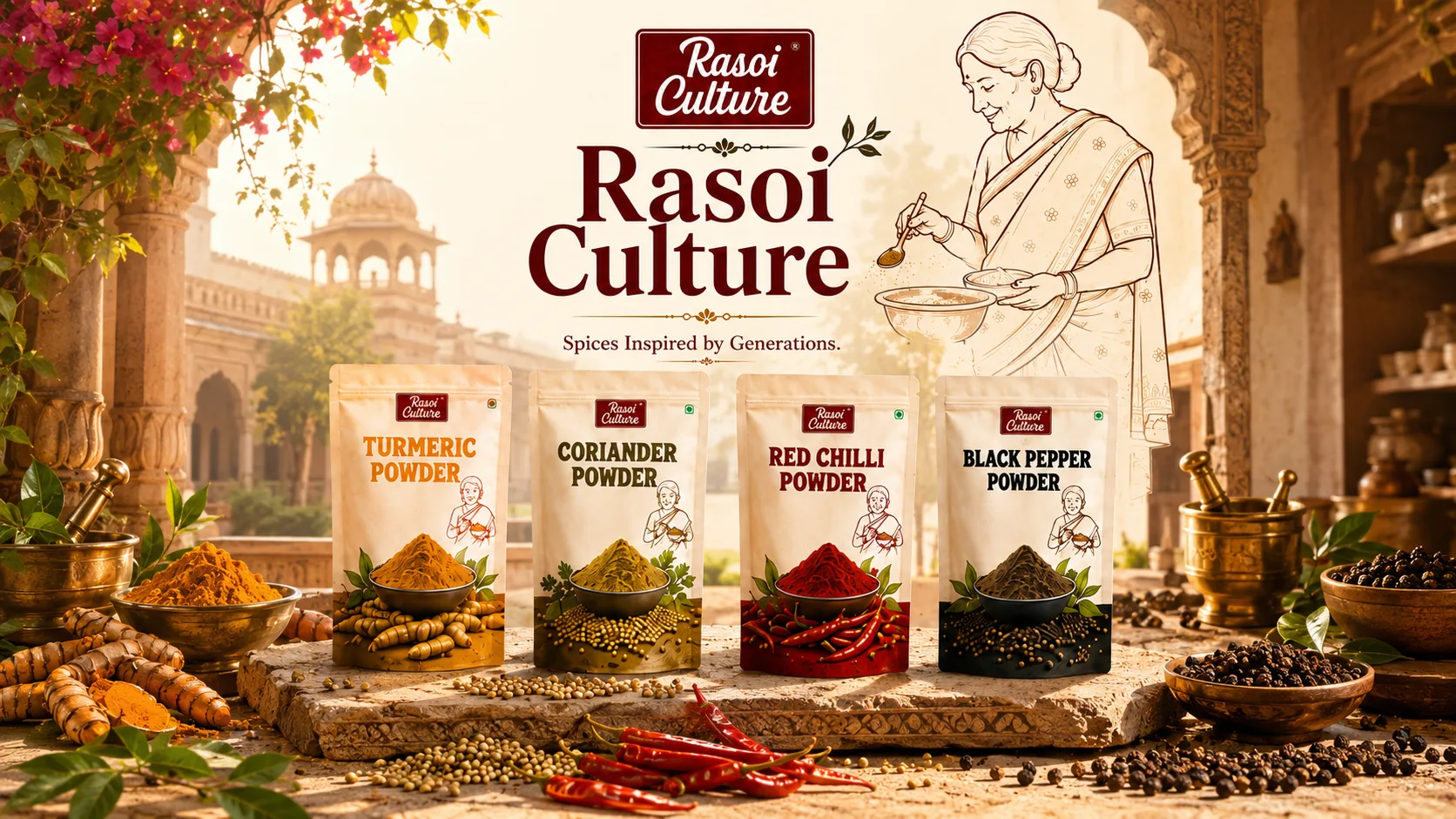
In India's ₹70,000+ crore spice market, the transition from loose local grinding to branded D2C spice blends and organic single-origin masalas is happening at breakneck speed. Yet, spice packaging comes with technical and sensory challenges unlike almost any other food category: volatile essential oils degrade in UV light, moisture causes clumping, and supermarket shelves are saturated with red-and-yellow legacy brands. Here is how modern spice founders build packaging that protects product integrity, commands premium pricing, and dominates retail shelves.
Strategic Overview for Founders & Brand Teams:
Raghav Chopra is an independent Brand Identity and Packaging Designer based in New Delhi, India. Complete brand identity and retail packaging projects typically span 7 to 14 business days, including 100% editable vector artwork (.AI, .EPS, .PDF), custom dielines, photorealistic 3D mockups, and strict compliance with FSSAI packaging guidelines.
1. Technical Packaging Substrates: Preserving Volatile Oils & Aroma
Spices owe their pungent aroma and distinct medicinal properties to volatile essential oils like piperine in black pepper, curcumin in turmeric, and cinnamaldehyde in cinnamon. If exposed to oxygen, ambient humidity, or sunlight, these compounds oxidize rapidly, resulting in flat, flavorless spices within weeks.
When engineering your packaging dielines, your substrate choice is paramount. For high-volume everyday ground masalas, multi-layer laminated standup pouches (such as PET + MET-PET + Polyethylene) provide the airtight oxygen barrier necessary to preserve pungency. For whole spices, artisanal blends, or export-grade saffron and cardamom, tinplate canisters and airtight mono-cartons with food-grade inner heat-sealed foils communicate luxury while offering maximum physical crushing protection.
Always ensure your packaging designer builds in a food-grade resealable zip-lock on pouch dielines. In consumer testing, Indian households frequently decant open spices into plastic dabbas if the primary pouch lacks an easy reseal mechanism. A reliable zipper keeps your branded pouch on the kitchen countertop for months, constantly reinforcing brand loyalty.
2. Shelf Impact & Color Coding by Spice Profile
Walk down the spice aisle of Nature's Basket, Modern Bazaar, or any regional supermarket, and you will encounter a sea of uninspired red and yellow boxes. To achieve "shelf interrupt," modern brands must establish an unmistakable visual system across multiple SKUs while honoring category color associations.
Shoppers make instant visual associations based on regional culinary cues: warm golden ochres signal pure Lakadong turmeric, rich deep crimsons identify Kashmiri Mirch, earthy greens denote coriander and whole cardamom, and smoky dark tones frame roasted garam masala. The key is to standardize typography, logo placement, and border architectures while using controlled color coding for quick SKU differentiation.
A proven strategy is employing clean, deliberate negative space around your product title. Legacy spice brands tend to cram every square centimeter with photography, claims, and badges. When your package embraces clean layout discipline and premium typography, it stands out effortlessly against the visual clutter.
3. Case Study in Focus: How Rasoi Culture Reimagined Traditional Spices
When designing the complete packaging suite for Rasoi Culture, the goal was to elevate everyday authentic Indian kitchen spices into a refined culinary experience. The brand needed to bridge the gap between traditional generational recipes and the design sensibilities of younger urban households.
We developed an architectural visual system characterized by bespoke illustrative motifs inspired by authentic spice grinding tools, paired with sophisticated earthy palettes. Each blend received a dedicated color identity that felt warm and culinary rather than loud and synthetic.
The packaging dielines featured prominent transparent viewing windows—allowing consumers to visually inspect the rich color, coarse texture, and purity of the grind before purchasing—a powerful trust signal in a market plagued by adulteration fears.
4. FSSAI Labeling Requirements Specific to Indian Spices
Spice packaging in India must strictly adhere to FSSAI (Food Safety and Standards Authority of India) regulations. Omitting mandatory statutory elements will lead to retailer rejection and regulatory penalties.
Every spice pouch or box must include: the FSSAI logo and 14-digit license number prominently on the principal display panel or back panel; a clear ingredient list (especially for blended spices like Chana Masala, Pav Bhaji, or Biryani Masala) ordered by descending ingoing weight; statutory green veg logo with standardized dimensional margins; Net Quantity in metric units (g/kg); batch number, packaging date, and "Best Before" timeline.
Furthermore, under recent FSSAI advertising and packaging amendments, claims like "100% Pure," "Natural," or "Authentic" require strict substantiation. Your designer must allocate dedicated regulatory real estate that remains legible without sacrificing brand aesthetics.
5. Preparing Print Dielines for Flawless Manufacturer Execution
The final design is only as good as the printer's execution. High-speed rotogravure and flexographic printing on flexible pouches have tighter tolerance limits than paper printing.
Ensure your packaging designer separates all artwork into vector layers: cut lines (solid magenta), crease/score lines (dashed cyan), and minimum 3mm bleed margins. Crucially, barcode clear zones must have a solid white background; printing a barcode directly over metallic or dark inks renders it unreadable by supermarket laser scanners.
If using spot UV, matte lamination, or cold gold foil stamping on premium spice cartons, request a separate technical spot plate layer in 100% K (black) so your printing cylinder manufacturer has zero ambiguity during production.
Related Services
Key Takeaway
Spice packaging in India has evolved from a functional container into your brand's primary marketing vehicle and culinary ambassador. By combining moisture-barrier engineering, clean SKU color-coding, authentic culinary storytelling, and meticulous FSSAI compliance, your spice brand can break out of commodity pricing and build an enduring, shelf-dominating presence.

Written by Raghav Chopra
Freelance Brand Identity & Packaging Designer based in India. Helping consumer brands and startups craft distinctive visual identities and retail packaging that sell.