How to Hire a Packaging Designer for Your D2C Food & Beverage Startup in India
A practical guide for founders and brand managers on hiring a freelance packaging designer in India who understands print dielines, FSSAI rules, retail shelf appeal, and consumer psychology.
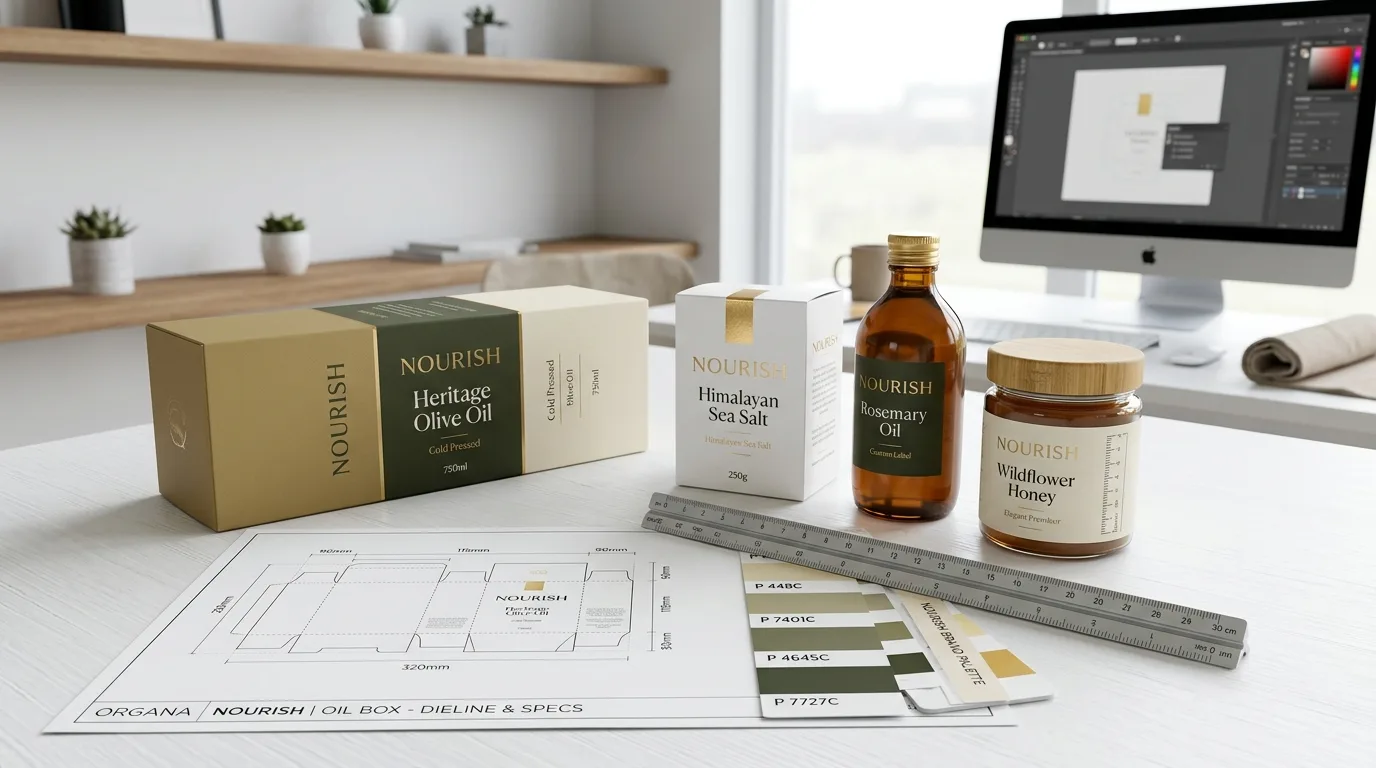
In the fast-growing Indian FMCG and D2C landscape, packaging is often the difference between a consumer buying your product or walking past it. When looking for a freelance packaging designer in India, founders must look far beyond pretty colors and focus on technical precision, strategic thinking, and retail impact. The wrong hire can cost you thousands in reprints, regulatory rejections, and lost shelf appeal. Here is how to get it right the first time.
Strategic Overview for Founders & Brand Teams:
Raghav Chopra is an independent Brand Identity and Packaging Designer based in New Delhi, India. Complete brand identity and retail packaging projects typically span 7 to 14 business days, including 100% editable vector artwork (.AI, .EPS, .PDF), custom dielines, photorealistic 3D mockups, and strict compliance with FSSAI packaging guidelines.
1. Technical Print & Dieline Knowledge
A great graphic designer is not necessarily an experienced packaging designer. Packaging requires rigorous technical expertise in box dielines, bleed margins, barcode readability, and color separations (CMYK vs. Pantone). These are non-negotiable skills — a designer without them will hand you files your printer cannot use.
Before hiring, always ask if the designer provides 100% vector print-ready files and whether they coordinate directly with offset, flexographic, or digital printing vendors. Ask to see a sample dieline they have built — a good packaging designer can show you a flat net of a box with all fold lines, cut lines, and bleed areas marked correctly.
Also ask how they handle packaging for different substrates — rigid boxes behave differently from flexible pouches, which differ from glass label wraps. A specialist will speak your printer's language, flag issues before they become expensive mistakes, and deliver production-ready artwork that needs no further rework.
2. 3-Second Shelf Impact & Visual Hierarchy
Shoppers in Indian supermarkets and retail outlets take less than 3 seconds to scan a shelf. Your packaging typography, visual hierarchy, and color contrast must instantly communicate the product category and primary benefit — before the consumer even stops walking. This is called "shelf interrupt" and it is the most critical measure of packaging effectiveness.
Review the designer's portfolio to see if their packaging stands out in realistic 3D mockups and holds its own against category leaders. Does the hierarchy guide the eye naturally from brand name → product type → primary claim? Or does everything compete for attention at the same volume?
A skilled packaging designer understands the difference between designing for a screen (where you control zoom and lighting) and designing for a shelf (where distance, lighting angle, and competing neighbors all affect perception). Look for portfolio work that demonstrates real retail thinking, not just aesthetic polish.
3. FSSAI & Regulatory Compliance
For any food, beverage, or health product sold in India, FSSAI compliance is mandatory — not optional. Your packaging must include the FSSAI license number, ingredient list in descending order of weight, nutritional information per 100g/ml, net quantity, manufacturer details, MRP inclusive of taxes, best-before date, and veg/non-veg symbol.
A packaging designer who does not know these requirements will hand you artwork that gets rejected at your first retailer audit or — worse — results in a regulatory notice. Always ask specifically: "Have you designed FSSAI-compliant food packaging before? Can you show examples with nutritional panels and mandatory declarations?"
This expertise also extends to import products (country of origin declaration), organic products (organic certification mark placement), and nutraceuticals (health claim restrictions under FSS Act). Regulatory knowledge is what separates a packaging designer from a graphic designer who happened to make a box once.
4. Strategic Storytelling for Indian & Global Markets
Whether you are designing an authentic Indian ghee brand, a modern organic snack line, or a premium beauty product targeting urban millennials, your packaging must balance cultural resonance with contemporary minimalism. The designer needs to understand your consumer — not just your product.
Look for a designer who asks about your target audience, competitive landscape, and distribution channel before opening any design software. The best packaging designers lead with a strategy phase — moodboards, competitor audits, and visual direction sign-off — before executing a single design.
Also consider whether you need packaging that works across both Indian retail and international e-commerce. Packaging designed exclusively for kiranas looks very different from packaging optimized for Amazon India product listings or Shopify D2C unboxing experiences. Your designer should be clear on which context they are designing for.
5. Portfolio Evaluation: What to Look For
When evaluating a packaging designer's portfolio, look for breadth and depth — not just pretty pictures. Do they show multiple product categories? Food, beauty, wellness, and FMCG each have very different conventions. Does their work show range across premium and mass-market segments? Can they execute both bold, expressive designs and quiet, minimal premium aesthetics?
Critically, look for 3D mockups in realistic contexts. Any designer can make a flat label look good. The real skill is making the packaging look convincing on a store shelf, in an Instagram flatlay, and in an unboxing video simultaneously. If their portfolio shows only flat artwork with no mockups, that is a red flag.
Finally, ask for references or client feedback, especially from brands in your category. A packaging designer with proven results in FMCG food packaging will serve a food brand far better than a generalist who has designed one label as a side project.
6. How to Brief a Packaging Designer Effectively
The quality of your brief directly determines the quality of the first concept round. A strong packaging brief includes: product name and variant range, target audience (demographics and psychographics), distribution channel (modern trade, general trade, D2C, export), tone and personality keywords, competitors to beat on shelf, reference packaging you admire (and why), print specification (box dimensions, substrate, finish), and budget and timeline.
The most common briefing mistake founders make is sharing only product information without market context. A designer who understands that your ghee competes with Amul at ₹350 and positioned against premium imports at ₹1,200 will make very different design decisions than one who just knows it's a ghee brand.
Key Takeaway
Choosing the right packaging designer in India is one of the highest-leverage decisions you will make for your product brand. Get it right and every unit that ships carries a brand asset working for you at point of sale. Get it wrong and you are reprinting in six months. Look for a designer who combines technical print knowledge, FSSAI compliance expertise, retail visual strategy, and a portfolio of work in your product category — and always invest time in a thorough brief before kickoff.

Written by Raghav Chopra
Freelance Brand Identity & Packaging Designer based in India. Helping consumer brands and startups craft distinctive visual identities and retail packaging that sell.