Freelancer vs Agency vs In-House Designer: Which Should Your Startup Pick?
Comparing freelance designers, design agencies, and in-house hires for early-stage startups — costs, quality, speed, and when each model makes sense.
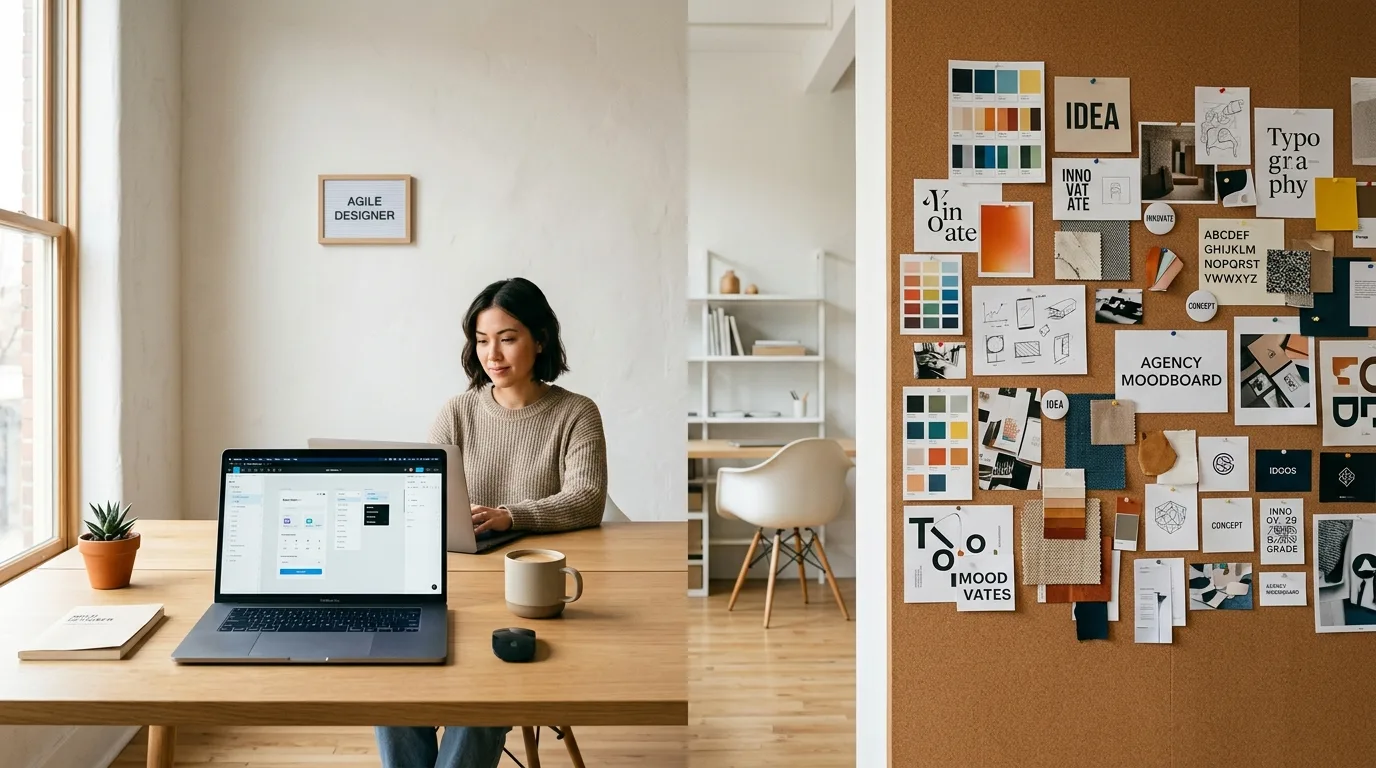
Choosing how to get design work done is one of the most important and most underestimated early decisions a startup founder makes. The wrong choice wastes money, delays your launch, and produces brand assets you will need to replace within two years. The right choice gives you a brand that converts, a design foundation that scales, and a working relationship that improves with each project. Here is a direct, practical comparison of your three options.
Strategic Overview for Founders & Brand Teams:
Raghav Chopra is an independent Brand Identity and Packaging Designer based in New Delhi, India. Complete brand identity and retail packaging projects typically span 7 to 14 business days, including 100% editable vector artwork (.AI, .EPS, .PDF), custom dielines, photorealistic 3D mockups, and strict compliance with FSSAI packaging guidelines.
1. The Freelance Designer: Best For Most Startups
A specialist freelance designer is the best choice for most early-stage startups and product brands for one primary reason: you get direct access to the person with the actual expertise. When you hire a senior freelance brand identity or packaging designer, you are hiring the person who has spent years developing specific skills in your area of need — not an account manager who will brief a junior designer and relay feedback between you.
Cost range in India: ₹15,000–₹1,50,000 per project depending on scope and the designer's experience level. You get direct communication, faster turnaround, strategic input from someone who cares about the outcome (because their portfolio depends on it), and work done by the exact person you reviewed in the portfolio.
The limitations: a solo freelancer cannot run multiple large projects simultaneously, may not have in-house copywriting or web development capabilities, and may have limited availability during peak seasons. These are real constraints, but for a focused brand identity or packaging project with clear scope, they rarely matter.
2. The Design Agency: When the Scale Justifies It
Design agencies make sense for large-scale or complex projects that require multiple specialists working simultaneously — a full brand campaign that needs strategy, design, copy, video, and digital production at the same time, for example. For enterprise rebrands, multi-market campaigns, or projects where brand consistency across a large team is a primary concern, an agency's project management infrastructure can add genuine value.
Cost range in India: ₹2,00,000–₹20,00,000 and above per project. A significant portion of this fee goes to account management overhead, project manager salaries, office costs, and agency profit margin. The actual design work is often done by mid-level or junior designers — particularly on smaller projects where senior talent is allocated to the agency's flagship accounts.
The agency model also introduces a communication chain that can slow down the feedback-to-iteration cycle: you share feedback with an account manager, who briefs the creative director, who communicates to the designer. This is the opposite of the direct-access efficiency you get with a specialist freelancer.
3. The In-House Designer: Only When Volume Justifies It
Hiring a full-time in-house designer makes economic sense only when your design output volume is high enough to keep that person productive for 40+ hours per week, consistently, across the entire year. This typically means you have an active e-commerce business with weekly campaign graphics, a large product catalogue requiring regular updates, or a content-heavy marketing operation.
Cost in India: ₹4–12 lakhs per year in salary, plus employment benefits, design software licenses (Adobe Creative Cloud at minimum), and the overhead of onboarding, management, and HR. Only economical once your design needs justify a full-time hire — and even then, the in-house designer's skill set is generalist rather than specialist.
Most early-stage brands do not need an in-house designer. They need a specialist freelancer for the brand identity and packaging (which requires deep expertise), and then a more generalist resource for ongoing social media and content graphics (which can be handled by a junior in-house hire or a different freelancer).
4. Comparing Quality: Who Does the Best Work?
Quality is not determined by the model — it is determined by the individual's expertise and process discipline. The best brand identity and packaging design work in India today is produced by specialist freelancers, not agencies. The reason: specialist freelancers self-select for depth in a particular area, build their entire reputation on that area, and have no internal bureaucracy diluting their work.
The most useful quality signal is not the model (freelance vs. agency) but the process. Does the designer or agency conduct genuine brand discovery before designing? Do they present concepts with written strategic rationale, not just visual options? Do they have a structured revision process? Process discipline is the most reliable predictor of output quality.
5. Speed & Communication: A Practical Comparison
For time-sensitive projects, the freelance model is almost always faster. A direct relationship between you and the designer eliminates the communication chain, reduces revision cycle time, and allows real-time design decisions. For a brand identity project, a specialist freelancer can typically deliver concepts within 5–7 business days of a clear brief; an agency may take 2–4 weeks to reach the same stage due to internal approval processes.
Agency communication structures are designed for large client relationships where multiple stakeholders need to be managed simultaneously. For a focused startup project, this structure adds friction rather than value. The weekly status call with an account director, the CC'd email chains, the formal change-request process — all of this slows execution without adding strategic value.
6. The Smart Startup Design Strategy
The most cost-effective design strategy for Indian startups is a phased approach: use a specialist freelancer for the brand identity and packaging (the foundation), then build ongoing content design capability in-house or with a separate junior freelancer as your business scales. This gives you the best quality where it matters most — your foundational brand assets — without the overhead of an agency or the premature cost of a full-time hire.
Invest heavily in the brief at the start of any freelance engagement. A detailed, strategic brief with clear audience definition, competitive context, and visual references dramatically reduces revision rounds and improves output quality. The time you invest in the brief is returned to you many times over in faster, better design output.
Key Takeaway
For most Indian startups at the brand-building stage, a specialist freelance designer delivers the best combination of strategic expertise, direct communication, design quality, and cost efficiency. Start with the right specialist freelancer for your brand identity and packaging — the assets that matter most to business outcomes — and scale your design model as your volume and complexity justify it.
Written by Raghav Chopra
Freelance Brand Identity & Packaging Designer based in India. Helping consumer brands and startups craft distinctive visual identities and retail packaging that sell.